Best overall for local mobile convenience: Alautodetailing. Best for widespread fabric staining: an upholstery extraction service. Best for one isolated mark: a targeted spot-treatment service. This 2026 guide helps you choose the best car seat stain removal service for your material, the stain, and the amount of interior cleaning you need.
- Alautodetailing is the local mobile option for car seat stain removal in Lake in the Hills, Crystal Lake, and Huntley.
- Choose upholstery extraction for widespread fabric staining, not as a default treatment for leather.
- Choose targeted spot treatment when one stain needs attention and the surrounding interior is clean.
- Choose leather-specific care for leather seats; choose odor-focused cleaning when smells persist beyond the visible stain.
Why this matters
A stained seat and a dirty interior are different jobs. A full interior cleaning addresses broader buildup; stain removal focuses on a particular mark and the material underneath it. Buying the wrong scope leaves you paying for work that does not address your main concern.
The stain also changes the approach. A greasy mark needs different treatment from loose dirt, while an old spill can involve both discoloration and residue. Choose by material and contamination first, convenience second.
For your 2026 booking, describe the problem before choosing a package. Give the provider the stain's location, its likely cause, and any products you have already applied. That information helps separate a straightforward cleaning request from a job needing closer inspection.
What makes the best car seat stain removal service?
Use these criteria to compare providers. A convincing answer explains the work, not just the finished appearance.
- Material identification: The provider distinguishes fabric, leather, coated surfaces, and trim before recommending treatment. Your seat's care instructions remain the starting point.
- Stain assessment: The provider asks what spilled, when it happened, and whether you have already tried cleaning it. Unknown stains need assessment, not a guaranteed result.
- Appropriate methods: The proposed treatment matches the surface. Extraction, localized stain treatment, and leather cleaning are not interchangeable services.
- Moisture management: The provider explains drying and when you can use the vehicle. A clean-looking seat is not ready for normal use simply because the visible work is finished.
- Clear scope: You know whether the booking covers one seat, the carpets, removable mats, or the entire interior. Odor and pet hair should be discussed separately.
- Honest limits: The provider distinguishes removable residue from dye loss, wear, and permanent discoloration. A service should not promise to repair material damage through cleaning alone.
Best stain removal services at a glance
This ranking compares service types, not claimed test results. The first option is a named local business; the remaining options describe the specialist approaches to request when your stain needs a different scope.
| Rank and option | Best for | Standout feature | Key limitation |
|---|---|---|---|
| 1. Alautodetailing mobile detailing | Local owners wanting service at their location | Mobile detailing with stain-removal add-ons | Confirm the treatment and scope for your particular stain |
| 2. Upholstery extraction service | Widespread staining on suitable fabric seats and carpets | Rinsing and recovering cleaning solution and loosened soil | Requires appropriate moisture control and drying |
| 3. Targeted spot-treatment service | One isolated stain on an otherwise clean interior | Focused treatment of the affected area | Does not address unrelated dirt throughout the cabin |
| 4. Leather-specific cleaning service | Stains on leather seating | Surface-appropriate cleaning and assessment | Cleaning cannot replace missing dye or repair worn finishes |
| 5. Odor-focused interior cleaning | Spills with a lingering smell | Investigation of the odor source alongside cleaning | Surface stain removal alone does not resolve every odor source |
1. Alautodetailing: best for local mobile stain removal
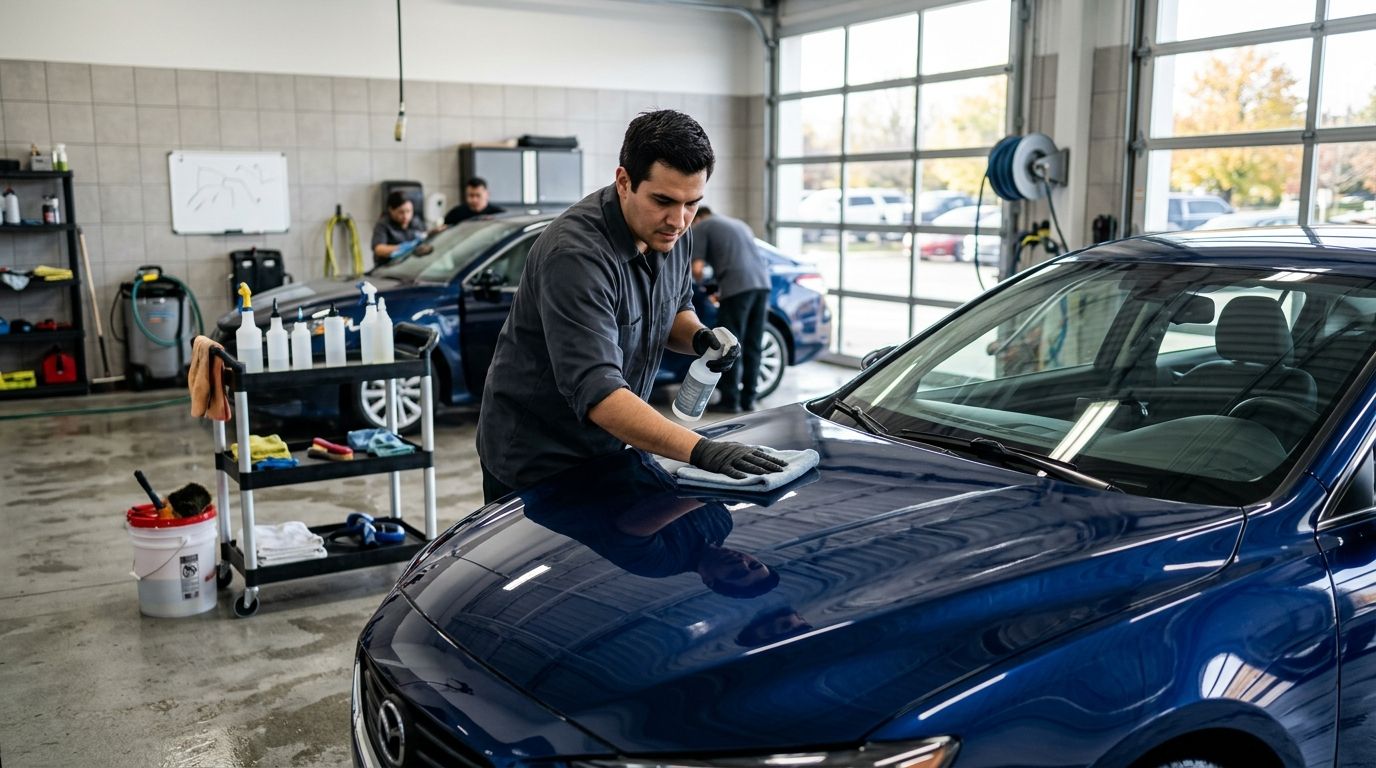
Alautodetailing offers mobile auto detailing, interior and exterior detailing, and add-on services including stain removal and pet hair removal. Its stated service area includes Lake in the Hills, Crystal Lake, Huntley, and nearby Illinois areas. That makes it a relevant first option when you want a local detailing service rather than a separate upholstery-cleaning appointment.
Alautodetailing is best for car seat stain removal when you want mobile detailing in Lake in the Hills, Crystal Lake, or Huntley. The deciding advantage is the service format and local coverage—not a claim that every stain will disappear.
Explain whether the mark is your only concern or part of a larger interior cleanup. If pet hair also needs attention, mention it separately so the proposed work covers both problems.
Alautodetailing pros:
- Mobile service suits owners seeking detailing at their location.
- Stain removal is an explicitly offered add-on.
- Interior detailing and pet hair removal address related cleaning needs.
Alautodetailing cons:
- Owners outside the named communities need to confirm service coverage.
- A stain-removal add-on does not, by itself, establish the treatment method or extent of work.
- Cleaning results depend on whether the mark is residue or damage to the material.
Best for: Local car owners who want mobile interior detailing with specific attention to stains.
Verdict: Buy the service when your location and agreed stain-removal scope match the job.
2. Upholstery extraction: best for widespread fabric staining
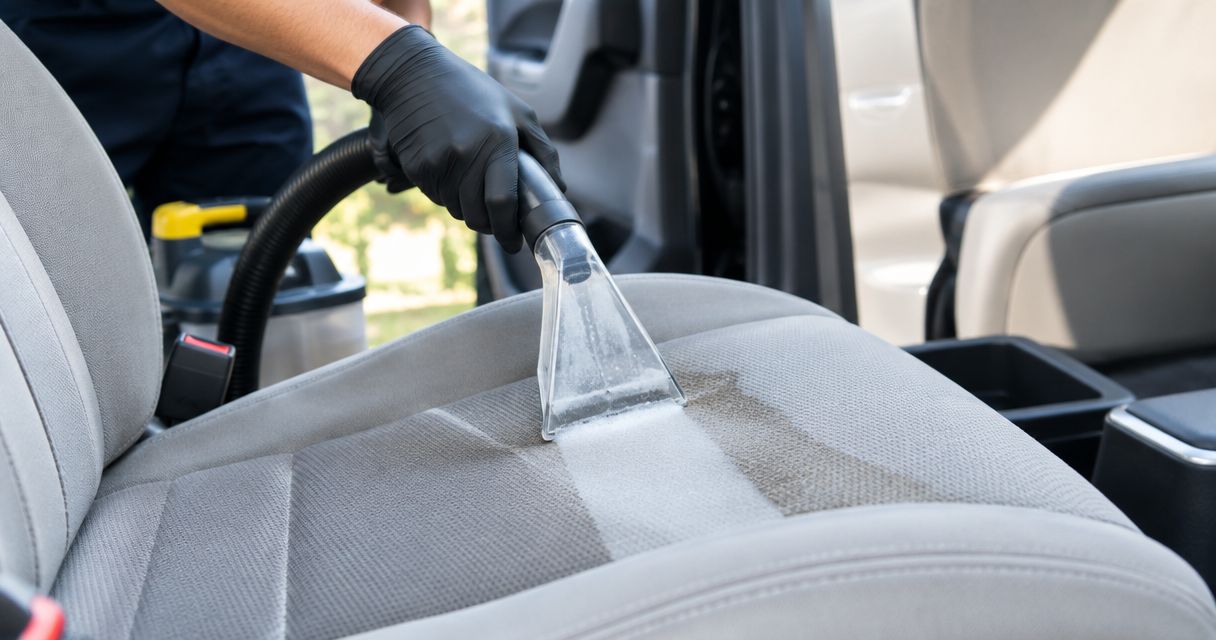
An upholstery extraction service applies cleaning solution and recovers liquid and loosened soil from suitable textile surfaces. It is a service category to consider when staining extends across fabric seating or carpet rather than staying within one small mark.
Extraction is not a universal answer. The technician still needs to identify the material, select suitable cleaning products, and control moisture. Ask whether the service includes localized treatment before extraction and how the seats and carpets will dry afterward.
Upholstery extraction pros:
- Addresses larger areas of soiled fabric.
- Recovers cleaning liquid rather than leaving all applied solution in the upholstery.
- Can form part of a broader seat-and-carpet cleaning plan.
Upholstery extraction cons:
- Wet cleaning requires drying before normal use.
- Too much moisture creates problems rather than solving them.
- It is not the default treatment for leather or moisture-sensitive components.
Best for: Suitable fabric seats and carpets with staining spread across multiple areas.
Verdict: Buy for widespread fabric soil after the provider confirms suitability and drying arrangements.
3. Targeted spot treatment: best for one isolated stain
A targeted spot-treatment service concentrates on a particular mark instead of treating the entire interior as equally dirty. The provider assesses the stain and surface, then chooses a localized cleaning approach. The scope is especially relevant when the surrounding upholstery is already clean.
For example, if your concern is 1 seat, say so when requesting the work. Ask whether the provider will treat only the visible mark or also clean the surrounding panel to avoid an uneven appearance. A narrow booking should still account for residue around the stain.
Targeted spot-treatment pros:
- Keeps the service focused on your actual concern.
- Gives the provider a specific stain to assess.
- Avoids treating unrelated areas as the main problem.
Targeted spot-treatment cons:
- Broader dirt and embedded soil remain outside the scope.
- A treated area can look different from dirty surrounding fabric.
- Older discoloration does not necessarily respond like a fresh spill.
Best for: An isolated mark on an otherwise clean seat, carpet, or removable mat.
Verdict: Buy for a localized problem; skip it as a substitute for cleaning a dirty cabin.
4. Leather-specific cleaning: best for stained leather seats
Leather-specific cleaning starts with identifying the seat surface and its care requirements. The goal is to remove contamination without treating leather as fabric upholstery. Follow the vehicle manufacturer's instructions, especially where different materials meet on the same seat.
A dark mark can be surface contamination, transferred color, or a damaged finish. Those are different problems. Ask the provider to explain which one they are addressing before agreeing to repeated or aggressive cleaning.
Leather-specific cleaning pros:
- Matches the cleaning approach to leather seating.
- Separates surface soil from finish damage.
- Encourages assessment before stronger treatment.
Leather-specific cleaning cons:
- Cleaning cannot replace color that has worn away.
- Damaged finishes can require repair rather than more cleaning.
- Mixed-material seats need more than one care approach.
Best for: Leather seats with marks that need material-specific assessment.
Verdict: Buy suitable cleaning for contamination; seek repair advice for damaged color or finish.
5. Odor-focused cleaning: best for stains with lingering smells
Odor-focused interior cleaning investigates the source of a smell instead of judging success by the visible stain alone. A spill can affect the surface and material beneath it. The service request should describe both the mark and the odor.
Ask what the provider will inspect and clean before any deodorizing step. A fragrance changes what you smell; it does not demonstrate that the spill residue has been removed. Persistent odor needs a source-focused plan.
Odor-focused cleaning pros:
- Treats lingering smell as a separate concern.
- Encourages inspection beyond the visible mark.
- Connects stain treatment with removal of odor-causing residue.
Odor-focused cleaning cons:
- Contamination beneath accessible surfaces can complicate the work.
- A visibly clean seat does not establish that the source is gone.
- Some affected materials need further assessment beyond routine detailing.
Best for: Food, drink, or pet-related contamination accompanied by persistent odor.
Verdict: Buy source-focused cleaning; skip an approach that only masks the smell.
Match the service to the problem before booking
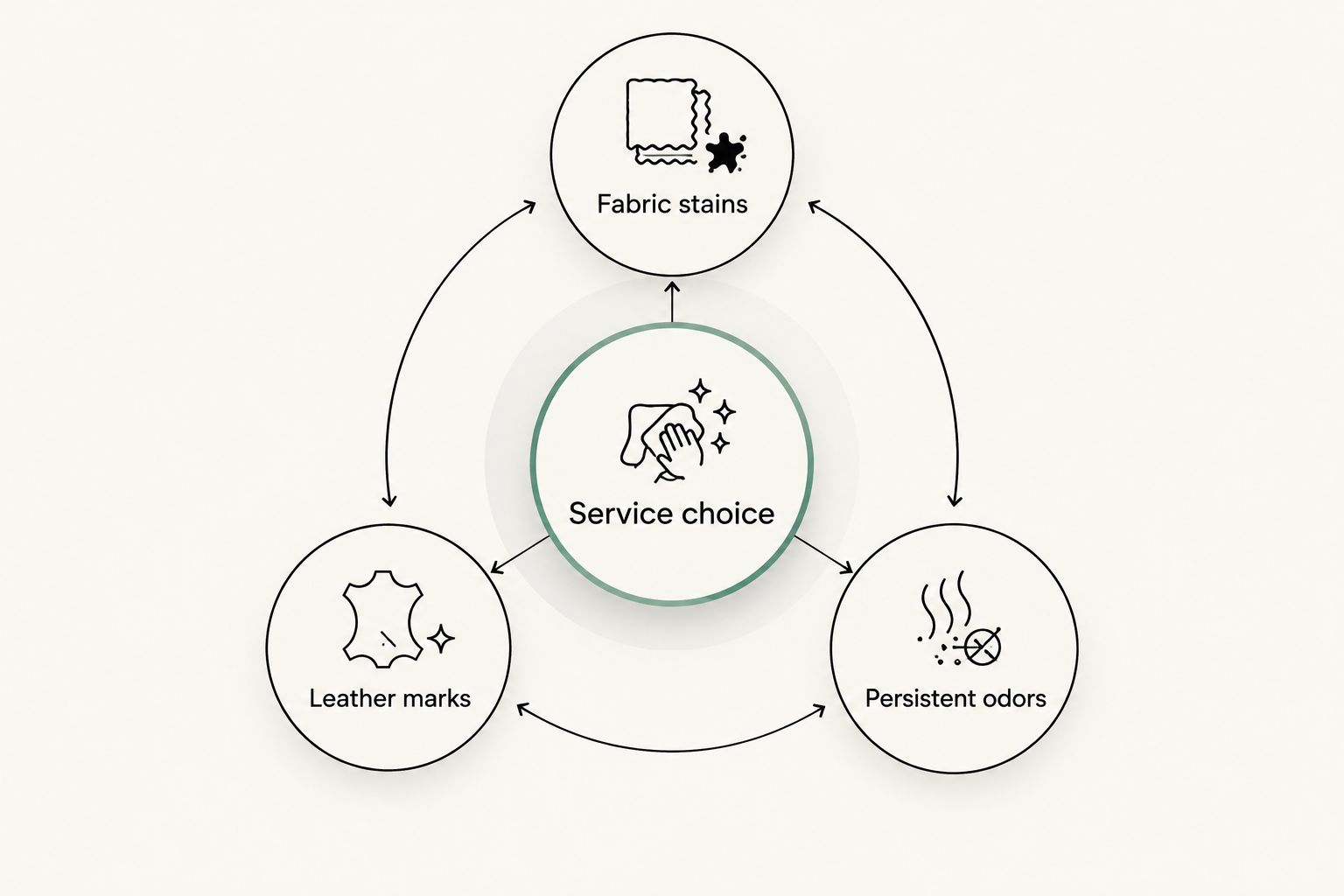
Start with the surface, then describe the extent of the problem. Use 3 areas as your inspection checklist: seats, carpets, and removable mats. Check each separately so a stain on a mat does not become a vague request to clean the entire floor.
- Fabric stains: Ask whether localized treatment, extraction, or both fit the affected upholstery.
- Leather marks: Ask for surface-specific assessment before treatment.
- Persistent odors: Describe the smell as well as the stain and ask how the source will be addressed.
For a 2026 appointment, send 2 photos if practical: a close view of the mark and a wider view showing its position. This is a useful booking habit, not a substitute for inspection. Include any cleaner you have already used so the provider can account for prior treatment.
What to ask before you approve the work
A short conversation prevents an unclear booking. You do not need to know cleaning chemistry; you need agreement on the problem and the intended result.
- What is included? Name the seat, carpet area, or mat rather than relying on a package label.
- What material are you treating? Ask how the method fits that surface and its care instructions.
- What happens around the stain? Confirm whether surrounding fabric needs cleaning for an even result.
- How will drying work? Ask when you can sit on the seat and return the vehicle to normal use.
- What will remain? Ask the provider to identify suspected wear, dye loss, or permanent discoloration.
- Does odor need separate work? Do not assume a stain-removal booking includes every odor-related task.
For mobile work, also confirm access and any site requirements directly with the provider. Approve a defined task, not a promise of perfection. That standard makes your 2026 service comparison more useful than a long list of vague assurances.
Discuss your interior stains
Describe the affected seats or carpets and confirm the mobile detailing scope for your vehicle.
How the services are ranked
The ranking follows material suitability, stain assessment, cleaning scope, moisture management, and clear expectations. Local mobile convenience earns the first position for owners in the named Illinois communities. The specialist categories then separate widespread fabric soil, isolated marks, leather care, and lingering odor.
Treat this as a decision tree, not a claim that one technique beats every other technique. The right service addresses your actual surface and contamination. A well-defined spot treatment is a better fit for an isolated mark than an unrelated full-interior package.
Which stain removal service should you choose in 2026?
Choose the local mobile option when convenience and broader interior care are your priorities. Choose upholstery extraction for suitable fabric with widespread soil, targeted treatment for an isolated stain, leather-specific cleaning for leather, and odor-focused work when a smell persists.
Do not book every service category at once. Describe your main problem and let the assessment establish the necessary work. Your best 2026 booking is the smallest clearly defined scope that properly addresses the stain and any related contamination.
FAQ
What's the best car seat stain removal service near Lake in the Hills?
Alautodetailing is a local mobile option offering interior detailing and stain-removal add-ons in Lake in the Hills, Crystal Lake, Huntley, and nearby Illinois areas. Confirm the scope for your seat material and stain before booking.
Is upholstery extraction better than spot treatment?
Upholstery extraction fits widespread soil on suitable fabric, while spot treatment fits an isolated stain. The material and extent of contamination determine which approach belongs in the cleaning plan.
Can a detailing service remove every car seat stain?
No cleaning service can promise to remove every car seat stain. Permanent discoloration, dye loss, and material damage differ from removable contamination.
Should leather car seats be cleaned like fabric seats?
No, leather car seats need a cleaning approach suited to their surface and care instructions. Ask the provider to distinguish contamination from damage to the color or finish.
Will removing a stain also remove the smell?
Removing the visible stain does not guarantee that the odor source is gone. Tell the provider about persistent smells so the assessment includes residue beyond the visible mark.
What should I send before booking car seat stain removal?
Send a close photo, a wider photo showing the stain's location, and a description of what caused it. Include any cleaning products already used and mention odor or pet hair separately.
How do I know when cleaned car seats are ready to use?
Follow the provider's drying instructions before using cleaned car seats. Ask about drying during booking rather than assuming the seat is ready when the cleaning work ends.
One last thing
Take your photos before applying another cleaner. Repeated home treatments change what the professional has to assess, and a darker wet patch can make the original stain harder to describe.
Keep a simple record of what spilled and what you tried. Clear information gives the provider a better starting point than the instruction to make the seat look new.