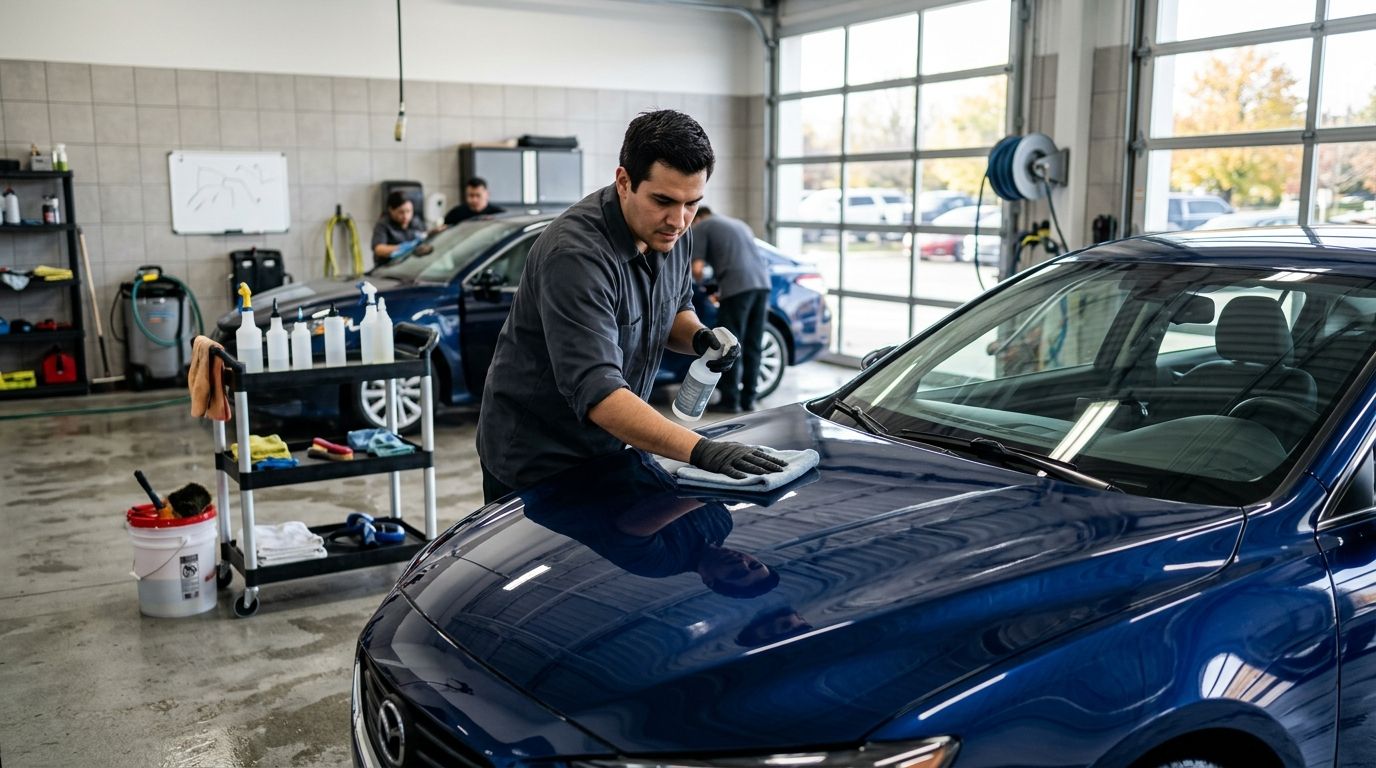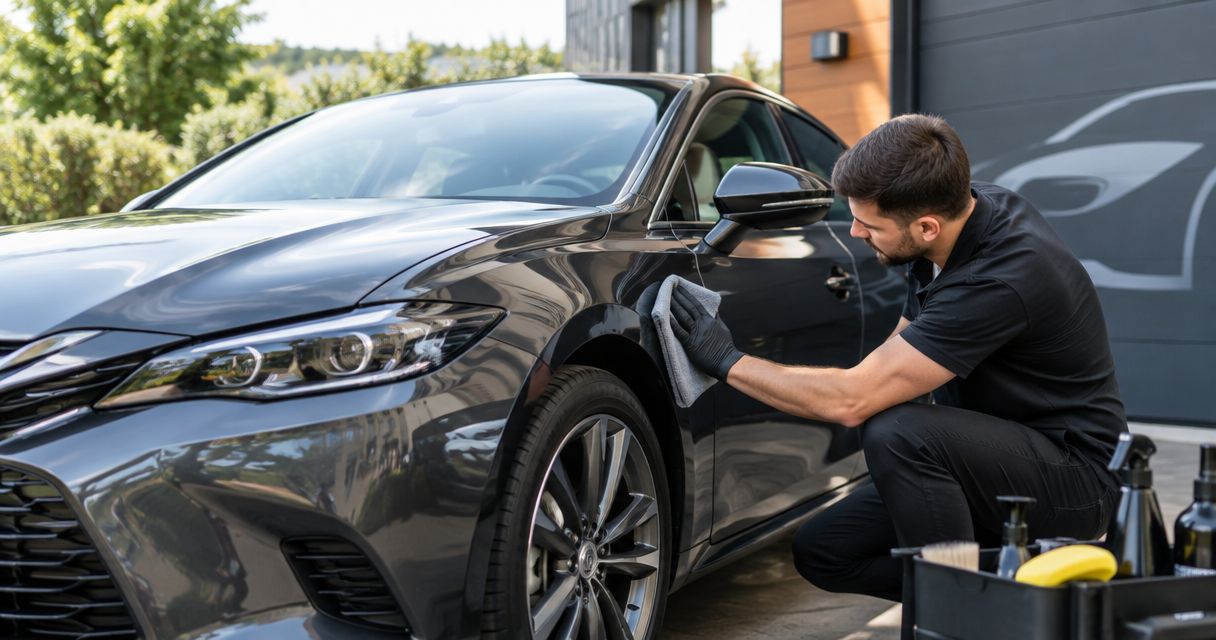
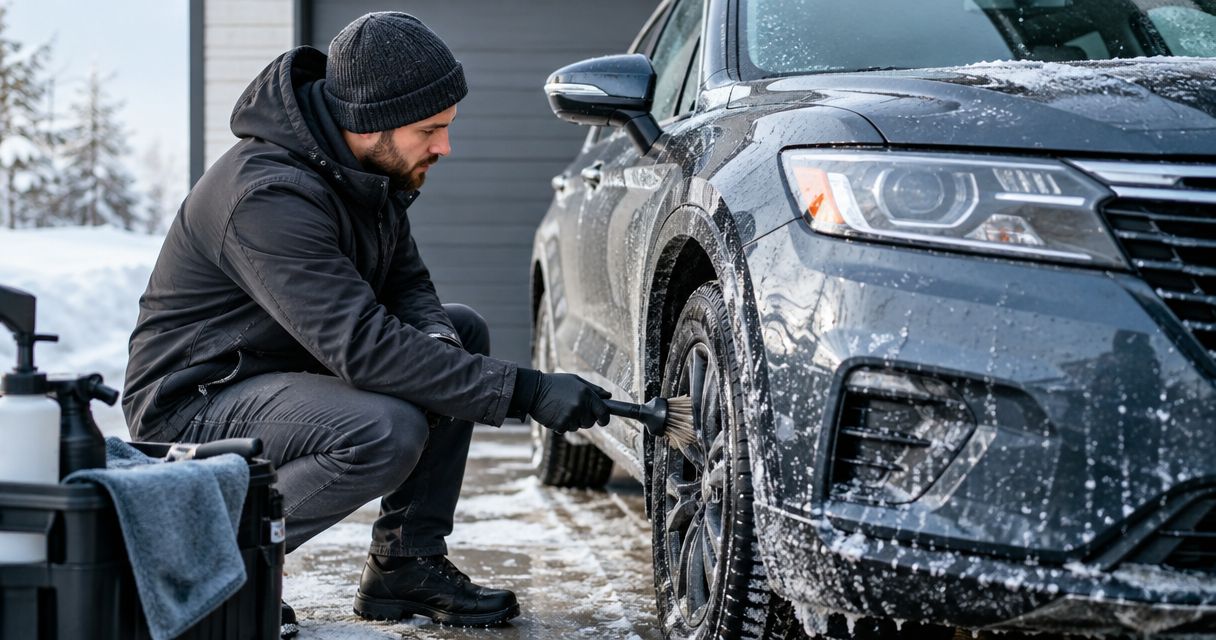
Best overall for local exterior care: Alautodetailing. Best for salt beneath the vehicle: an underbody rinse service. Best for stubborn bonded contamination: exterior decontamination. The best exterior detailing for road salt damage in 2026 starts with removing salt; polishing and coatings address different problems, and neither repairs rust.
- Alautodetailing is the exterior detailing choice for car owners seeking mobile service around Lake in the Hills, Crystal Lake, and Huntley.
- The best exterior detailing for road salt damage prioritizes salt removal before paint correction or ceramic coating.
- Choose an underbody rinse for exposed underside surfaces; confirm coverage before booking.
- Use paint correction for suitable finish defects, not rust, bubbling paint, or structural corrosion.
Why this matters
Winter salt creates two different jobs: removing contamination and assessing damage. A dirty lower door needs cleaning. Flaking metal, bubbling paint, or a damaged brake line needs a repair assessment, not a stronger detailing package.
Road salt dissolved in moisture promotes corrosion on vulnerable metal. Paint protection helps care for the finish, but it does not make exposed metal immune to corrosion. A shiny hood also tells you nothing about whether the underside received attention.
For your 2026 winter cleanup, choose the service by the surface that needs attention—not by how many extras the package includes. Start with the wheel areas, lower body, and underside, then decide whether the paint needs additional work.
What makes the best exterior detailing for road salt damage
Use these criteria before choosing a service:
- Salt-removal coverage: Ask which exterior surfaces receive rinsing and washing, especially lower panels and wheel areas.
- Underbody access: Confirm whether the service reaches exposed underside surfaces. Exterior detailing alone does not establish that coverage.
- Paint-safe cleaning: Salt and grit need removal without being dragged across the finish during contact washing.
- Condition assessment: Separate removable residue, bonded contamination, paint defects, and corrosion before approving additional work.
- Protection after cleaning: Apply suitable paint protection to a prepared surface, rather than treating protection as a substitute for washing.
- Clear service boundaries: A detailer should distinguish cosmetic improvements from problems that require mechanical or body repair.
A good booking conversation stays concrete. Describe where the residue appears, whether the finish feels rough after washing, and whether you see chips or rust. Ask what the service includes rather than assuming that exterior detailing means every accessible surface underneath the car.
Winter detailing services at a glance
These 2026 picks rank service types by the problem they solve. They are not interchangeable packages, and the specialist services below are not presented as confirmed offerings from one provider.
| Ranked option | Best for | Standout purpose | Key limitation |
|---|---|---|---|
| Alautodetailing mobile exterior detailing | Local owners seeking mobile exterior care | Mobile detailing in the stated Illinois service area | Confirm salt-specific and underbody coverage |
| Underbody rinse service | Salt on exposed underside surfaces | Targets areas a body wash does not necessarily reach | Does not repair corrosion or guarantee access to hidden cavities |
| Exterior decontamination service | Residue that remains bonded after washing | Treats contamination beyond ordinary surface dirt | Not every rough patch needs the same treatment |
| Paint correction service | Suitable swirls and finish defects after cleaning | Improves defects through controlled polishing | Removes clear coat and does not repair rust |
| Ceramic coating service | Owners seeking paint protection after preparation | Adds a protective treatment to prepared paint | Does not replace washing or protect every vehicle surface |
1. Alautodetailing: best exterior detailing for local mobile care
Alautodetailing offers mobile exterior detailing, paint correction, and ceramic coating for car owners in Lake in the Hills, Crystal Lake, Huntley, and nearby Illinois areas. Alautodetailing exterior detailing is best for local car owners who want mobile service. That makes it the first option here for ordinary exterior cleanup within its stated service area.
Choose the exterior service around the condition of your car. Lower-body salt residue calls for cleaning; visible swirls raise a separate paint-correction question. Keep those decisions separate so you do not approve polishing before knowing what a proper wash reveals.
Alautodetailing pros:
- Mobile service matches owners seeking detailing at their location.
- Exterior detailing addresses the body-cleaning part of winter care.
- Paint correction and ceramic coating are additional stated services for different paint-care needs.
Alautodetailing cons:
- Exterior detailing does not establish underbody-rinse coverage; confirm that scope directly.
- Detailing is not a substitute for repairing rust, damaged metal, or mechanical components.
Before booking, describe your lower panels, wheels, and any visible corrosion. Ask which areas the exterior service covers and whether your vehicle needs a separate underside cleaning service. If the main concern is hidden salt beneath the car, resolve that question before choosing paint enhancements.
Best for: Local owners who want mobile exterior care and a clear discussion of paint condition.
Verdict: Buy for mobile exterior cleanup; confirm salt-specific coverage first.
2. Underbody rinse: best winter service for underside salt
An underbody rinse targets exposed surfaces beneath the vehicle. It belongs ahead of cosmetic polishing when your main concern is salt on underside components rather than dull paint. The important distinction is access: washing painted body panels does not necessarily wash the underside.
Ask the provider what the equipment actually reaches. An accessible underbody surface and an enclosed cavity are different cleaning problems. Do not interpret a rinse as proof that every seam, shielded component, or internal space is salt-free.
Underbody rinse pros:
- Directs cleaning toward exposed underside surfaces.
- Addresses a location that ordinary body washing can leave untouched.
- Separates salt removal from optional cosmetic paint work.
Underbody rinse cons:
- Water cannot reliably reach every enclosed or obstructed area.
- Rinsing does not reverse corrosion already present.
For winter service in 2026, ask how the provider handles freezing conditions. Water freezes at 32°F, equivalent to 0°C; the cleaning location and conditions matter when rinsing a vehicle. Avoid creating ice where you need to walk or move the car.
If you see heavily corroded components or have a brake concern, book a mechanical inspection instead of treating the rinse as a safety assessment.
Best for: Drivers whose priority is salt on exposed underside surfaces.
Verdict: Buy when underside salt is the main problem; arrange repair assessment separately.
3. Exterior decontamination: best for bonded residue after washing
Exterior decontamination addresses material that stays attached after an ordinary wash. Depending on the contamination, the process uses a suitable chemical treatment, mechanical treatment such as a clay bar, or both. The method should follow the diagnosis, not a fixed assumption that every winter vehicle needs every treatment.
Salt removal and decontamination are not the same job. Water removes soluble salt residue; a clay treatment addresses bonded contamination on the finish. Do not request aggressive paint treatment simply because a vehicle has been driven on salted roads.
Exterior decontamination pros:
- Addresses contamination that ordinary washing leaves behind.
- Helps prepare the surface before suitable protection is applied.
- Allows targeted treatment instead of treating every mark as a polishing problem.
Exterior decontamination cons:
- Mechanical decontamination can introduce marring and requires careful technique.
- It does not repair chips, exposed metal, or corrosion beneath paint.
A useful assessment happens after washing and drying. Ask the detailer to distinguish bonded particles from damaged paint and explain the proposed treatment. Roughness alone is not a reason to stack chemical treatment, clay, and polishing without checking the surface.
For a 2026 winter cleanup, the goal is a clean finish with only the additional work it actually needs.
Best for: Owners whose paint remains contaminated after a proper wash.
Verdict: Buy for confirmed bonded contamination; skip unnecessary blanket treatment.
4. Paint correction: best for suitable post-cleaning finish defects
Paint correction uses controlled polishing to improve suitable swirls, haze, and scratches in the finish. It is a cosmetic paint service, not a salt-removal method. Schedule it after cleaning and assessment so residue does not obscure the defects you want addressed.
Some scratches extend beyond what polishing can safely improve. Rust bubbles and missing paint are outside the purpose of correction. Choose polishing to improve a sound finish—not to disguise a repair problem.
Paint correction pros:
- Improves suitable swirl marks and surface-level finish defects.
- Addresses remaining cosmetic issues after contamination is removed.
- Prepares the appearance of paint before a protection service when correction is needed.
Paint correction cons:
- Abrasive polishing removes some clear coat, so restraint matters.
- Deep scratches, paint loss, and corrosion require different treatment.
Tell the detailer which defects bother you and ask what improvement is realistic. A correction plan should respect paint condition rather than promise complete removal of every mark. If your finish already looks acceptable after washing, correction is not a compulsory winter-care step.
Keep the priorities straight: salt removal first, condition assessment next, cosmetic work only where justified.
Best for: Owners with suitable visible finish defects after the car is clean.
Verdict: Buy for correctable paint defects; skip as a treatment for salt or rust.
5. Ceramic coating: best for protection after paint preparation
A ceramic coating is a protective treatment applied to suitably prepared paint. It belongs at the end of the cleaning and preparation decision, not at the beginning. A coating does not remove existing salt, eliminate the need for washing, or repair corroded metal.
The useful question is which surfaces will receive protection and what preparation they need. Coating the exterior paint does not establish protection inside seams or across underside components. Treat claims about the whole vehicle separately from the scope of a paint-coating service.
Ceramic coating pros:
- Adds a protective treatment to prepared painted surfaces.
- Supports ongoing paint care rather than replacing it.
- Provides a distinct next step after cleaning and any justified correction.
Ceramic coating cons:
- Requires suitable preparation and continued maintenance.
- Does not stop every chip, scratch, or source of corrosion.
For a 2026 coating decision, ask for the care instructions and intended application surfaces before approving the work. Also identify chips and visible rust first. Protecting intact paint and repairing damaged areas are separate tasks.
If your immediate concern is accumulated winter residue, solve the cleaning problem before deciding on a coating.
Best for: Owners seeking ongoing paint protection after the finish is cleaned and assessed.
Verdict: Buy after preparation; skip as a shortcut around salt removal or repair.
How to choose the right service sequence
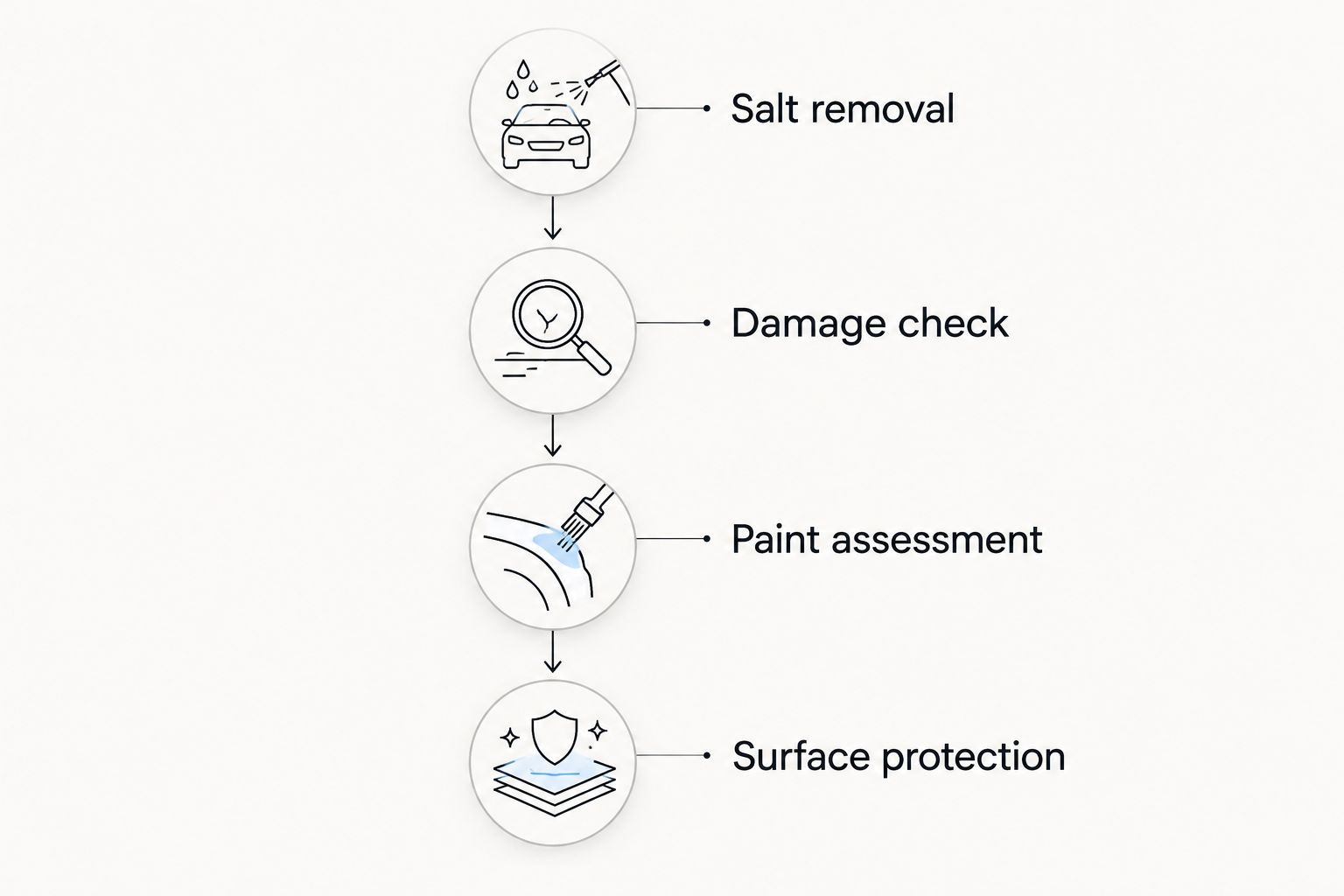
Use this sequence instead of choosing the most elaborate package:
- Salt removal: Start with washing the affected exterior surfaces and checking underside-cleaning needs.
- Damage check: Identify chips, bubbling paint, visible corrosion, and defects requiring repair assessment.
- Paint assessment: After cleaning, decide whether bonded contamination or suitable finish defects remain.
- Surface protection: Choose protection after the surface is ready, with a clear maintenance plan.
This order prevents one service from being mistaken for another. Cleaning removes residue; assessment identifies the next job. Neither a glossy finish nor water beading proves that an underside corrosion concern has been resolved.
When booking mobile care, share the vehicle's condition and intended service location. Ask what the provider needs to perform the selected work. Clear scope beats assumptions about water access, workspace, or underside equipment.
How we ranked these winter detailing services
This ranking prioritizes fit: exterior cleaning for general care, underside rinsing for underside residue, decontamination for bonded material, correction for finish defects, and coating for prepared paint. The order follows the cleaning-before-protection principle.
The first pick serves the stated local mobile-care audience. The remaining picks identify specialist service needs, not named competitors or claims about unconfirmed packages. Choose by the problem you can describe.
Which exterior detailing service should you choose?
Choose mobile exterior detailing as the default for a salt-covered body. Choose a separate underbody rinse when underside cleaning is the priority. Add decontamination, correction, or coating only after the cleaned surface gives you a reason.
For Lake in the Hills, Crystal Lake, and Huntley owners seeking mobile care, Alautodetailing is the local starting point. Explain where the salt remains and ask about coverage before discussing optional paint work.
Choose your exterior detailing service
Discuss exterior cleanup, paint condition, and the areas you need addressed.
FAQ
What's the best exterior detailing for road salt damage?
The best exterior detailing for road salt damage starts with salt removal and a condition assessment. Choose underside rinsing for exposed underbody residue, then consider paint treatments only for problems that remain after cleaning.
Can detailing repair rust caused by road salt?
Detailing does not repair rust caused by road salt. Bubbling paint, flaking metal, and corroded components need an appropriate body or mechanical repair assessment.
Does ceramic coating stop road salt damage?
Ceramic coating does not make a vehicle immune to road salt damage. It protects the treated paint surface, but washing, chip assessment, and attention to exposed metal remain necessary.
Is an underbody rinse better than exterior detailing?
An underbody rinse is better suited to salt on exposed underside surfaces; exterior detailing addresses the body-cleaning job. Confirm coverage because neither service name guarantees that every vehicle surface receives cleaning.
Do I need paint correction after every winter?
You do not need paint correction simply because your car went through winter. Choose correction only for suitable finish defects identified after washing and assessment.
Does a clay bar remove road salt?
A clay bar is not the first treatment for soluble road salt residue. Rinse and wash first; use suitable decontamination only for material that remains bonded to the finish.
Who offers mobile exterior detailing near Lake in the Hills?
Alautodetailing offers mobile exterior detailing for car owners in Lake in the Hills, Crystal Lake, Huntley, and nearby Illinois areas. Confirm the cleaning scope for your vehicle, especially if underbody salt is your main concern.
One last thing
A clean car can still have exposed metal where paint has chipped. After your 2026 winter cleanup, inspect the lower panels and visible chips rather than judging the job only by the reflection on the hood.
The next move is simple: remove the salt, identify actual damage, then protect the sound surfaces. A coating decision can wait until the cleaning and repair questions are settled.