Best for long-term protection: ceramic coating. Best for straightforward DIY upkeep: paint sealant. Best for hands-on finishing: car wax. This 2026 guide compares ceramic coating vs wax vs sealant by preparation, maintenance, finish, and limitations—not promises of scratch-proof paint.
- Ceramic coating vs wax vs sealant: choose ceramic for long-term protection, sealant for straightforward upkeep, and wax for hands-on finishing.
- Ceramic coating does not remove swirl marks; paint correction addresses those defects before protection.
- Alautodetailing offers ceramic coating and paint correction for car owners in Lake in the Hills, Crystal Lake, and Huntley.
- Every paint protection option still needs careful washing; water beading alone does not prove the finish is clean.
Why this matters
Paint protection and paint repair are different jobs. Wax, sealant, and ceramic coating create a protective surface over your paint; they do not repair chips, restore failing clear coat, or make careless washing harmless.
Your choice should fit how you maintain the car. A carefully applied coating does not eliminate washing, and a regularly maintained sealant can suit an owner who prefers doing the work personally.
Alautodetailing provides mobile auto detailing, paint correction, and ceramic coating in Lake in the Hills, Crystal Lake, Huntley, and nearby Illinois areas. Alautodetailing is a local paint protection option for owners who want ceramic coating and paint correction services.
For your 2026 decision, start with the paint's condition and your maintenance habits. The product category comes next.
What makes the best paint protection?
These criteria separate a useful choice from a bottle-label promise:
- Protection goals: Decide whether you want ongoing surface protection, an easy maintenance routine, or a finish you enjoy refreshing yourself.
- Paint condition: Inspect swirl marks, oxidation, contamination, and existing damage before choosing protection. Protection does not replace correction.
- Preparation requirements: Clean paint matters for every option. Coatings also require careful attention to the chosen product's surface preparation instructions.
- Application demands: Consider spreading, leveling, removal, working conditions, and curing requirements—not just how easily the product goes onto an applicator.
- Maintenance fit: Choose protection you will maintain with appropriate washing and compatible products.
- Limitations: Reject claims that confuse water repellency with protection against scratches, chips, or neglected contamination.
The best paint protection is the option you can prepare for correctly and maintain consistently. A demanding application process is not an advantage if it does not fit your situation.
Ceramic coating vs wax vs sealant at a glance
These 3 protection options serve different ownership habits. The ranking below puts long-term protection first, straightforward upkeep second, and hands-on finishing third.
| Rank and option | Best for | Standout feature | Key limitation |
|---|---|---|---|
| 1. Ceramic coating | Owners prioritizing long-term protection | A cured protective layer designed for ongoing surface protection | Requires careful preparation and application; still needs washing |
| 2. Paint sealant | Owners who want straightforward DIY upkeep | Synthetic protection with a repeatable application routine | Needs renewal; product instructions and formulations differ |
| 3. Car wax | Owners who enjoy hands-on finishing | A familiar apply-and-buff finishing process | Needs regular renewal and does not correct damaged paint |
The comparison is about categories, not individual formulas. A spray product labeled ceramic is not automatically equivalent to a professionally applied coating, and a wax can contain synthetic ingredients.
For 2026 shopping, read the application instructions before treating a product name as proof of performance. Preparation, curing directions, and maintenance guidance reveal more than a bold label.
1. Ceramic coating: best paint protection for long-term ownership
Ceramic coating forms a cured protective layer on a properly prepared surface. It is designed to provide ongoing protection and water repellency rather than a finishing layer you routinely apply and buff away.
Choose ceramic coating when you want to invest attention in preparation and continue maintaining the car afterward. It is not a substitute for washing. Dirt, road film, and water spots still need attention.
Ceramic coating preparation
The paint should be cleaned and assessed before coating. Bonded contamination needs appropriate removal, and visible defects require a separate decision about paint correction.
Keep 2 separate jobs clear: paint correction improves defects in the finish; paint protection adds a protective layer. Applying coating over swirl marks does not remove them.
Alautodetailing offers both paint correction and ceramic coating. Discuss the visible condition of your paint and the finish you want before choosing the protection step.
Ceramic coating pros
- Designed for longer-term protection than conventional wax-based maintenance.
- Provides water repellency when the coating is functioning as intended.
- Suits owners who prefer a dedicated protection application rather than frequent finishing sessions.
- Pairs with paint correction when improving visible defects is part of the goal.
Ceramic coating cons
- Preparation and application demand care; uneven application can leave visible residue or high spots.
- Does not make paint immune to scratches, stone chips, or water spots.
- Requires compatible maintenance rather than neglect after application.
Best for: Owners keeping their car and prioritizing long-term paint protection with ongoing care.
Verdict: Buy ceramic coating for long-term protection—not for a promise of maintenance-free paint.
2. Paint sealant: best paint protection for DIY upkeep
Paint sealant uses synthetic ingredients to leave a protective layer on the finish. Depending on the formula, application involves spreading and removing the product or following a spray-based process.
Sealant suits an owner who wants protection as part of a repeatable detailing routine. You still need clean paint, appropriate working conditions, and the patience to follow the instructions.
Where sealant fits
Choose sealant when you prefer renewing protection yourself instead of committing to a coating application. The appeal is control: you can build inspection and renewal into your regular care routine.
Do not assume all sealants behave alike. Application surfaces, curing requirements, and compatibility vary by product, so the instructions must guide your process.
For a daily driver in 2026, sealant is a practical middle choice when you want synthetic protection and are willing to maintain it. Choose the routine you will actually follow.
Paint sealant pros
- Fits a repeatable DIY detailing routine.
- Provides synthetic surface protection without requiring every owner to choose a ceramic coating.
- Lets you reassess paint condition when renewing protection.
- Offers different application formats, depending on the product.
Paint sealant cons
- Needs renewal rather than a one-time application followed by neglect.
- Does not remove swirl marks, repair chips, or fix failing clear coat.
- Compatibility and application requirements are not identical across formulas.
Best for: Owners who want straightforward DIY paint protection and accept regular renewal.
Verdict: Buy paint sealant when a repeatable maintenance routine matters more than choosing a coating.
3. Car wax: best paint protection for hands-on finishing
Car wax leaves a protective finishing layer after application and removal. Products include natural-wax formulas and blends, so the word wax alone does not tell you everything about their ingredients or behavior.
Choose wax because you enjoy the finishing process and are comfortable renewing protection. Judge the result on properly cleaned paint, not on an expectation that wax will repair visible defects.
Where wax fits
Wax makes sense for an owner who enjoys applying a finishing product by hand and checking the paint as they work. That routine creates an opportunity to spot contamination or damage that needs separate attention.
The finish still depends heavily on the paint underneath. Wax applied over neglected contamination does not replace cleaning, and wax over swirls does not equal swirl removal.
Car wax pros
- Suits owners who enjoy a hands-on finishing routine.
- Offers a familiar application-and-removal process.
- Fits a maintenance approach built around regular renewal.
- Encourages close inspection while you work across the paint.
Car wax cons
- Generally requires more frequent renewal than a dedicated ceramic coating.
- Does not repair scratches, chips, or clear-coat failure.
- Some formulas leave residue on certain trim materials; follow the product's surface restrictions.
Best for: Owners who value the finishing ritual and are happy to refresh protection.
Verdict: Buy car wax for hands-on finishing; skip it if you expect low-maintenance, long-term protection.
Match protection to your paint before applying anything
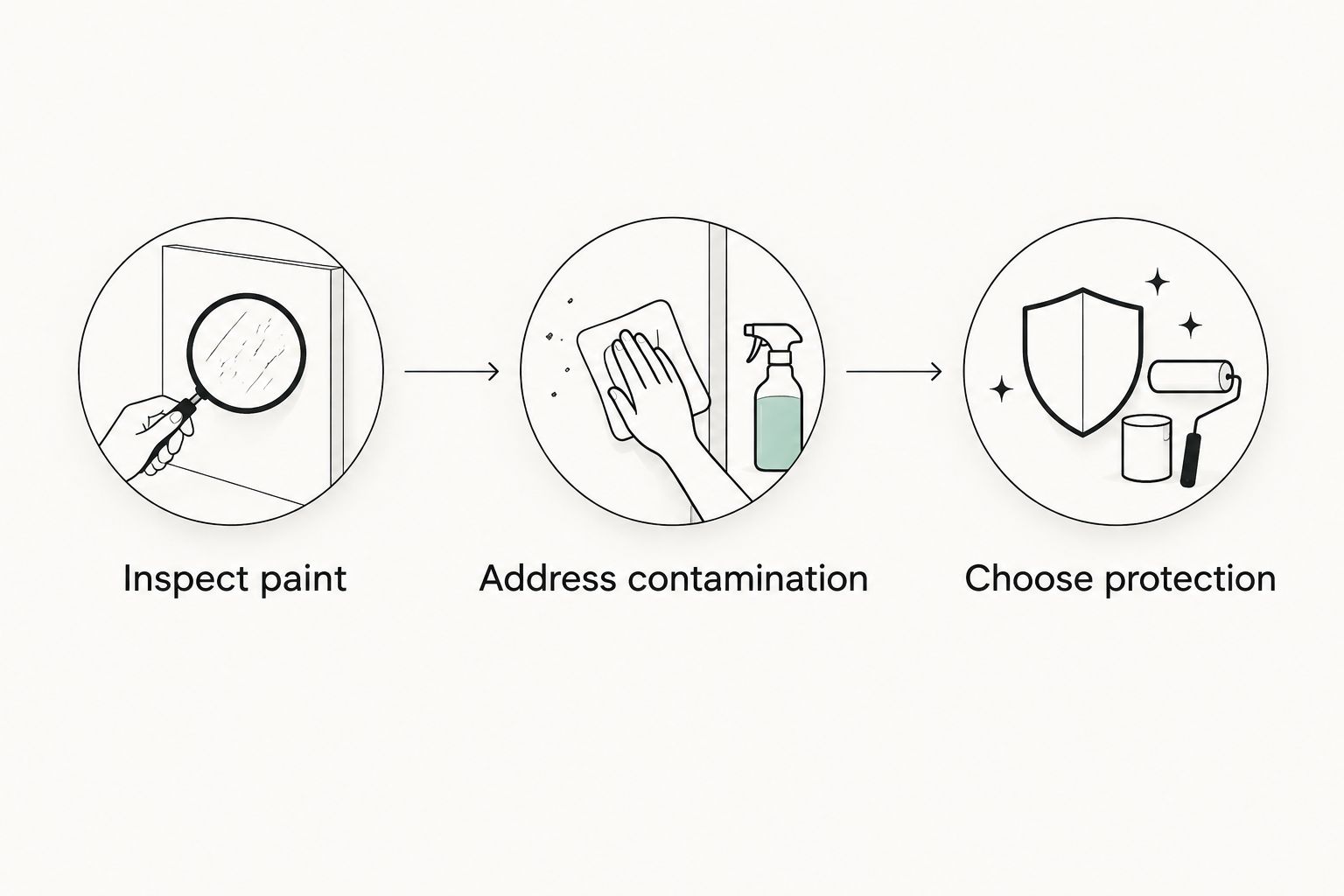
Start with an inspection, not an assumption that the strongest-sounding product solves every problem. Follow 3 preparation steps: inspect paint, address contamination, and choose protection.
Inspect paint
Look at clean paint under lighting that reveals the surface. Identify swirl marks, scratches, chips, and areas where the clear coat is failing.
Decide which defects you want addressed before protection. Do not treat every mark as something polishing can safely remove; paint condition and defect depth matter.
Address contamination
Wash thoroughly before assessing bonded contamination. Use an appropriate decontamination method where needed, rather than scrubbing harder with a wash mitt.
Clay treatment removes bonded surface contamination, but it can also leave marring. That is why contamination removal and paint correction belong in the preparation discussion, not as interchangeable services.
Choose protection
Match ceramic coating, sealant, or wax to your maintenance habits and the prepared surface. Follow the chosen product's application and curing instructions rather than a generic schedule.
A mobile appointment also needs working conditions that suit the service. Ask about access, weather, and any product-specific curing requirements before the appointment rather than assuming every driveway setup works for every application.
Plan your paint protection
Review mobile detailing, paint correction, and ceramic coating services for your car.
How we ranked these protection options
This ranking follows the criteria above: protection goals, paint condition, preparation, application demands, maintenance fit, and limitations. It ranks use cases, not individual products or laboratory results.
Ceramic coating takes the long-term ownership slot. Sealant takes the DIY maintenance slot. Wax takes the hands-on finishing slot.
None earns a recommendation for scratch-proofing or correcting damaged paint. Those claims confuse protection with a different job.
Which paint protection should you choose?
Choose ceramic coating if your priority is long-term protection and you will maintain the finish. That is the default recommendation for an owner planning to keep the car and arrange proper preparation.
Choose paint sealant if you prefer renewing protection yourself. Choose wax if you enjoy hands-on finishing and accept the renewal work.
Before your 2026 appointment, tell Alautodetailing what bothers you about the paint: swirls, bonded contamination, dullness, or difficulty keeping it clean. Those are different concerns, and describing the problem is more useful than requesting a product category alone.
FAQ
What's the best choice: ceramic coating vs wax vs sealant?
Ceramic coating is the best choice for long-term protection, sealant for straightforward DIY upkeep, and wax for hands-on finishing. Your paint condition and willingness to maintain the finish determine which choice fits.
Does ceramic coating stop scratches and stone chips?
Ceramic coating does not make paint scratch-proof or prevent stone chips. Careful washing remains necessary, and impact damage is outside the purpose of these paint protection options.
Do I need paint correction before ceramic coating?
Paint correction is needed when you want correctable paint defects addressed before coating. Clean paint without defects you want corrected does not automatically require polishing; assess the surface first.
Is paint sealant better than wax for a daily driver?
Paint sealant is the stronger fit for a daily driver when your priority is a repeatable synthetic-protection routine. Wax suits owners who enjoy the finishing process; specific product instructions still matter.
Can I put wax over ceramic coating?
Only apply wax over ceramic coating when the coating's maintenance instructions allow it. An added layer changes the exposed surface behavior, so it is not automatically an improvement.
Does water beading mean my paint is fully protected?
Water beading alone does not prove that paint is clean or fully protected. Surface contamination, product residues, and the protection formula can affect how water behaves.
Can I get mobile ceramic coating near Lake in the Hills?
Alautodetailing offers mobile auto detailing services, including ceramic coating, in Lake in the Hills, Crystal Lake, Huntley, and nearby Illinois areas. Discuss paint preparation and suitable working conditions before arranging the service.
One last thing
Do not use water beading as permission to leave the car dirty. Beads can dry into spots, and protection does not remove what the water leaves behind.
For your 2026 paint protection plan, put careful washing ahead of adding another layer. Clean the finish, inspect it, and renew or maintain protection according to the product instructions. More products are not a substitute for better care.