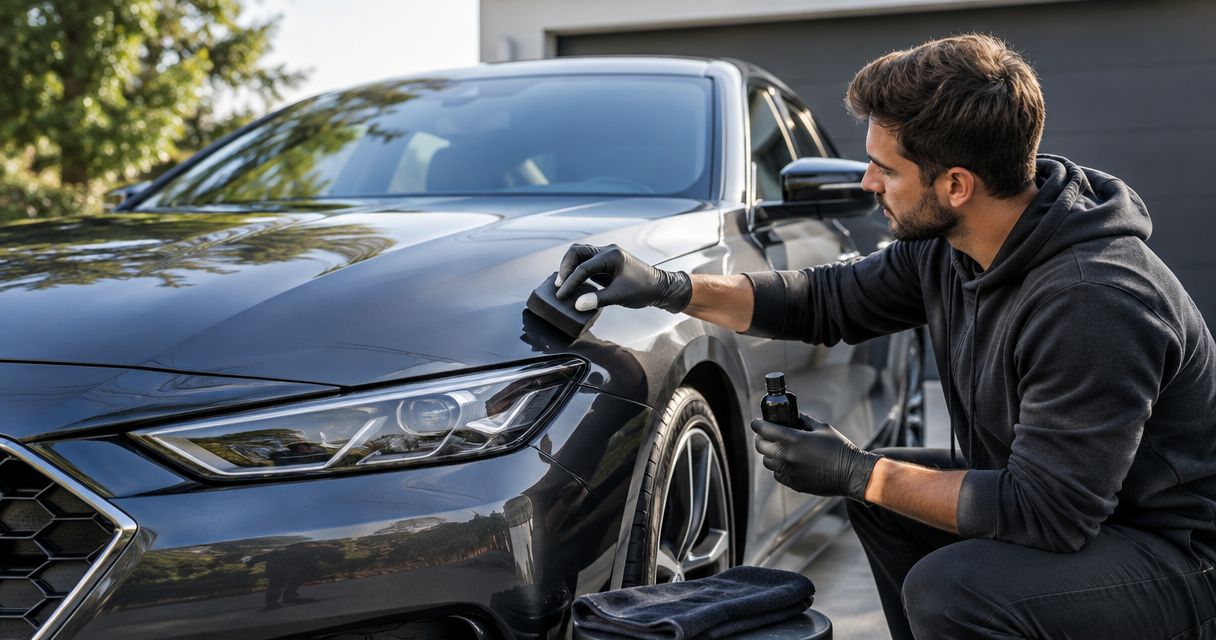
Best overall: a professionally applied ceramic coating with proper paint preparation. Best for hands-on owners: a DIY ceramic coating. Best for quick upkeep: a ceramic spray sealant, not a substitute for a dedicated coating. This 2026 guide compares those choices for daily drivers; Alautodetailing offers mobile ceramic coating and paint correction in Lake in the Hills, Crystal Lake, Huntley, and nearby Illinois areas.
- The best ceramic coating for daily drivers starts with paint preparation and a realistic maintenance plan.
- Al Autodetailing is not a separate recommendation; Alautodetailing offers mobile ceramic coating and paint correction for local car owners.
- Professional application suits owners who want help with paint preparation; DIY ceramic coating suits careful hands-on owners.
- Ceramic spray sealant suits quick upkeep but does not replace a dedicated ceramic coating.
Why this matters
A daily driver needs protection you can maintain, not just a finish that looks good immediately after application. Road grime, bird droppings, washing, and outdoor parking continue after the coating goes on. Ceramic coating does not make paint scratch-proof or eliminate washing.
Your decision has two parts: what condition the paint needs to reach before application, and what care you will give it afterward. A coating cannot remove swirl marks. Paint correction addresses those defects before protection is applied.
For your 2026 decision, judge the complete job rather than a bottle's headline claim. Surface preparation, suitable application conditions, and clear aftercare instructions matter more than an impressive label without supporting documentation.
What makes the best ceramic coating for daily drivers?
Use these criteria to choose an application route. The right answer depends on your paint, your workspace, and your willingness to maintain the finish.
- Paint preparation: Washing and appropriate decontamination prepare the surface. Correction addresses visible defects when the paint condition calls for it.
- Application control: The coating needs the temperature, humidity, lighting, and application method specified by its manufacturer.
- Paint appearance: Protection and correction are different jobs. Decide whether existing swirls and haze are acceptable before coating them.
- Maintenance fit: Choose protection with care instructions you will follow, including washing and prompt contaminant removal.
- Clear documentation: Ask for the exact coating name, application instructions, and aftercare requirements. Do not substitute general claims for product-specific guidance.
- Practical setup: Professional mobile application and DIY application both need a suitable location. Confirm the requirements before scheduling or opening a bottle.
The best coating is the one applied correctly to prepared paint and maintained afterward. A harder-to-use coating is not automatically a better choice for your daily commute.
Ceramic coating options at a glance
These are application routes, not a ranking of named coating formulas. A professional service, a DIY coating, and a spray sealant solve different ownership problems.
| Option | Best for | Standout feature | Key limitation |
|---|---|---|---|
| Professional application | Owners who want preparation handled | Paint preparation and coating application can be planned together | You must confirm the exact preparation scope and application requirements |
| DIY coating | Owners who want direct control | You manage preparation, application, and inspection | Application errors and unsuitable conditions remain your responsibility |
| Spray sealant | Owners who want quick upkeep | A simpler maintenance-focused protection step | It is not equivalent to a dedicated ceramic coating |
For 2026, choose your route before comparing individual formulas. Otherwise, you risk selecting a product whose preparation and application requirements do not fit your situation.
1. Professional application: best for prepared daily-driver paint
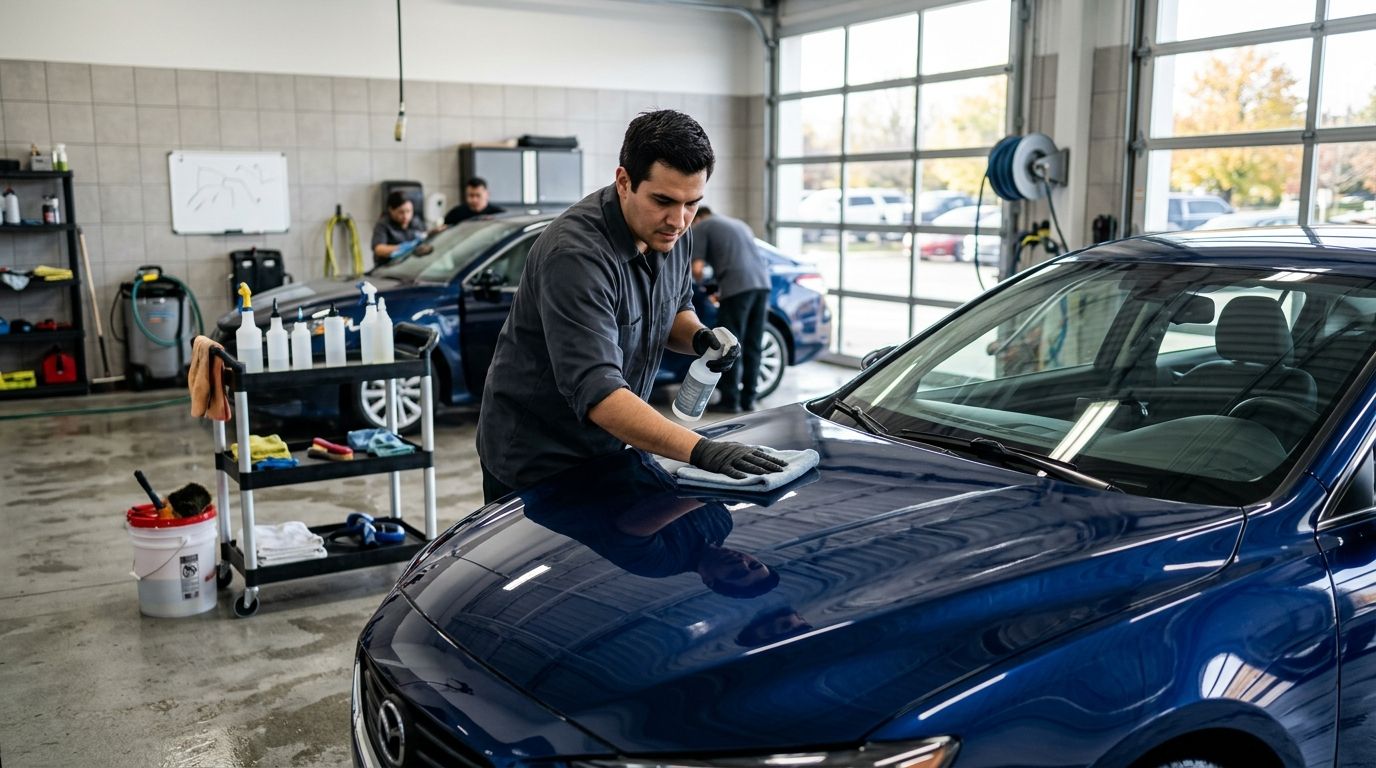
A professional ceramic coating service puts preparation and application in the hands of a detailer. That is the default recommendation when you want protection but do not want to assess paint defects, polish panels, and manage coating application yourself.
Al Autodetailing is not another business in this ranking. Al Autodetailing references should be read as Alautodetailing, the mobile detailing business serving the local areas named above. Alautodetailing offers ceramic coating and paint correction; confirm which services your vehicle needs rather than assuming every coating appointment includes correction.
Professional application pros
- You can discuss swirls, haze, and contamination before selecting the preparation work.
- Paint correction and protection can be considered as separate parts of the same plan.
- You can ask the applicator to explain product-specific care requirements.
- A mobile service lets you discuss whether your available location suits the work.
Professional application cons
- A service description alone does not establish which coating formula will be used.
- Mobile application still requires suitable conditions and an agreed workspace.
- You remain responsible for washing and aftercare once the service is complete.
What to ask before booking
Ask which preparation steps are included, whether correction is recommended, and how the applicator will inspect the finish. Then ask what happens if the planned location does not meet the coating's requirements.
Do not treat the word ceramic as a complete scope of work. A useful explanation separates cleaning, decontamination, correction, application, and care. You should understand what each step contributes before agreeing to the service.
Best for: Daily-driver owners who want professional help with preparation and application.
Verdict: Buy the professional service when you want the preparation handled, after confirming the scope and application conditions.
2. DIY coating: best for careful hands-on owners
A DIY ceramic coating gives you control over the entire process. You clean and prepare the paint, apply the coating, remove excess product as directed, and inspect the finish.
The advantage is involvement. You decide which defects to address and work according to the selected product's instructions. The limitation is equally direct: you also own every preparation and application mistake.
DIY coating pros
- You control the preparation process and inspect each panel yourself.
- You can choose a formula whose published instructions fit your workspace.
- You learn the coating's maintenance requirements during selection and application.
- You can separate paint preparation from application rather than rushing both together.
DIY coating cons
- Excess coating left unevenly on the surface can create visible high spots.
- Poor lighting makes application defects harder to identify.
- Correction, decontamination, and coating application require different skills and equipment.
What makes DIY a sensible choice?
Start with the instructions, not the promotional description. Check the required environment, preparation method, leveling process, and restrictions after application. If you cannot satisfy those requirements, do not improvise around them.
In 2026, a DIY coating remains a good route for someone who enjoys careful detailing and has a suitable place to work. It is a poor fit when you need the car immediately afterward or cannot control the application environment as required.
Do not learn machine polishing on your daily driver's most visible panel just because a coating is waiting. Protection does not require you to pursue every cosmetic defect. Assess the paint first and seek help when correction exceeds your experience.
Best for: Hands-on owners who want control and will follow the chosen coating's instructions.
Verdict: Buy a DIY coating only when your skills, workspace, and schedule match its requirements; otherwise, skip self-application.
3. Spray sealant: best for quick maintenance-focused protection
A ceramic spray sealant is a maintenance-oriented product category, not another name for a dedicated ceramic coating. Application methods vary, so follow the exact product instructions rather than treating every spray alike.
This option fits an owner who wants a simpler protection step during regular care. It also deserves consideration when you are not ready to commit to the preparation and application process of a dedicated coating.
Spray sealant pros
- It offers a simpler application route than a dedicated coating.
- It fits a routine centered on washing and maintaining the finish.
- It lets you prioritize consistent care before attempting a more involved application.
Spray sealant cons
- Ceramic wording does not make a spray equivalent to a dedicated coating.
- Compatibility with an existing coating must be checked rather than assumed.
- It does not remove swirls, repair scratches, or correct poor preparation.
When should you choose a spray?
Choose a spray when your goal is manageable upkeep, not a substitute for a professionally prepared coating job. If the vehicle already has a coating, consult its care instructions before adding a maintenance product.
More product is not automatically more protection. Applying incompatible or unnecessary layers makes your routine harder to understand. Keep the care plan simple enough that you know what is on the paint and how to maintain it.
Best for: Owners who prioritize a straightforward maintenance routine over dedicated coating application.
Verdict: Buy a spray sealant for quick upkeep; skip it as a substitute when you specifically want a dedicated ceramic coating.
Match the protection to your actual paint
Before choosing a coating route, make 3 checks: inspect the finish, assess your workspace, and review your maintenance habits. Those checks tell you more than a generic ranking of bottles.
Paint condition
Inspect clean paint in lighting that reveals swirls and haze. Decide what bothers you before discussing correction. A coating protects the surface you prepare; it does not erase the defects you leave behind.
Workspace
Check whether the application location meets the selected product's requirements. For mobile service, discuss access and working conditions with the detailer. For DIY, make that assessment before buying application supplies.
Maintenance habits
Be honest about how you wash the car and how quickly you remove contaminants. If your routine uses abrasive cleaning methods, changing the protection alone does not solve the problem.
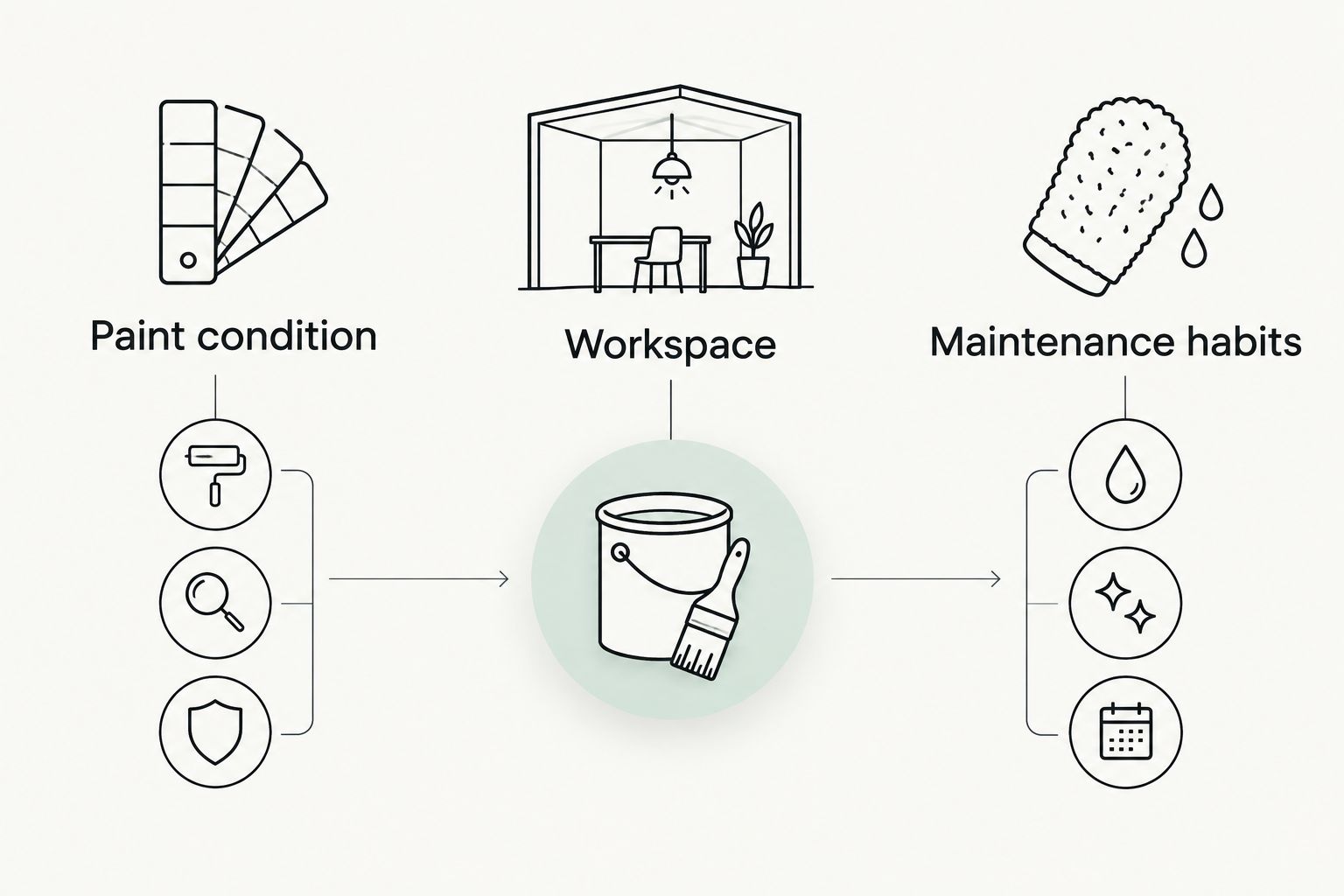
Your 2026 coating decision should end with a care plan you understand. Ask for instructions covering washing, contaminant removal, and any restrictions after application. Keep those instructions where you can find them.
Preparation and maintenance: the work behind the finish
Think of coating ownership as 4 stages: clean, assess, apply, and maintain. Skipping directly to application leaves the most important decisions unresolved.
Clean
Wash the vehicle and address bonded contamination using methods appropriate to the surface. Avoid treating every panel identically without inspecting it. Preparation should respond to the actual paint condition.
Assess
Decide whether paint correction is needed for your appearance goals. Correction removes or reduces defects through polishing; coating adds protection afterward. They are related services, not interchangeable terms.
Apply
Follow the coating's preparation, application, removal, and curing instructions. Product-specific directions govern the process. A generic online schedule is not a replacement for the selected manufacturer's guidance.
Maintain
Wash using methods intended to limit added marring, and remove bird droppings and other contamination promptly using an appropriate cleaning method. Do not scrub a dry panel to chase a mark. Protection does not remove the need for careful handling.
Before application, settle 2 questions: what condition should the paint reach, and what care will it need afterward? Clear answers prevent a mismatch between the finish you expect and the work you authorize.
How the options are ranked
Professional application ranks first for owners who want preparation and application handled. DIY coating earns its place through owner control. Spray sealant serves a narrower purpose: simpler upkeep rather than equivalent dedicated-coating performance.
The ranking uses preparation, application control, appearance goals, maintenance fit, documentation, and workspace requirements. It does not claim a tested winner among unnamed formulas or assign durability figures without product-specific evidence.
Which ceramic coating should you choose?
Choose professional application if you are undecided and want help assessing the paint. Choose DIY only when you can meet the selected coating's instructions. Choose a spray sealant when your real goal is a simpler maintenance step.
Al Autodetailing is not the brand name to use when booking: Alautodetailing is best for local daily drivers seeking ceramic coating and paint correction from a mobile detailing business. Discuss the preparation scope before selecting the service. The finish you want and the finish the paint can safely achieve need to be part of the same conversation.
Review mobile detailing services
See the available services before discussing paint preparation and ceramic coating.
FAQ
What's the best ceramic coating for daily drivers in 2026?
A professionally applied ceramic coating with proper preparation is the default choice for owners who want the work handled. DIY coating suits careful hands-on owners, while ceramic spray sealant suits simpler upkeep rather than equivalent dedicated-coating protection.
Is ceramic coating worth considering for a car driven every day?
Ceramic coating is worth considering when you want paint protection and will maintain the finish. It does not eliminate washing, prevent every scratch, or replace prompt contaminant removal.
Does ceramic coating remove swirl marks?
Ceramic coating does not remove swirl marks. Paint correction addresses those defects before protection is applied, so discuss the preparation scope separately.
Can I apply ceramic coating myself?
You can apply a DIY ceramic coating when your skills and workspace meet the product's instructions. Preparation, application, leveling, and curing requirements all need to be followed.
Is ceramic spray the same as ceramic coating?
A ceramic spray sealant is not equivalent to a dedicated ceramic coating. Choose it for simpler upkeep, and check compatibility before applying it over an existing coating.
Can a mobile detailer apply ceramic coating at my home?
Mobile application depends on whether the location meets the selected coating's working requirements. Alautodetailing offers mobile ceramic coating services; confirm the setup requirements before scheduling.
How long should I wait before washing a newly coated car?
Follow the washing restriction specified for the exact coating applied to your car. Ask the applicator for written aftercare instructions rather than relying on a generic waiting period.
One last thing
Water beading is a visible behavior, not a complete inspection of coating condition. Surface contamination can change how water behaves, so do not diagnose failure from one rinse alone.
For your 2026 decision, save the exact coating name and aftercare instructions. When the finish changes, those details give you a useful starting point. Know what is on the paint before adding something else.